
Our new Page is
Coming Soon
Contact Us
PEPTIDE
BIO-REGULATORS
Simple Analogy
If your body is a factory:
- Supplements = raw materials
- Hormones = managers giving big commands
- Bioregulators = precise emails to a specific department telling them to improve performance
UNLOCK YOUR POTENTIAL
Bioregulators are tiny protein fragments (peptides) that tell your cells what to do.
01
Turn Genes “On”
They help switch on the body’s natural repair programs.
02
Help Cells Make the Right Proteins
Once genes are activated, cells produce specific proteins needed for:
- Repair
- Regeneration
- Anti-aging processes
- Hormone balance
- Tissue recovery
03
Target Specific Organs
Different bioregulators are designed for different tissues:
- Adrenal support
- Brain support
- Immune system
- Prostate
- Thyroid
- Blood vessels
- Muscle & cartilage
Think of them as organ-specific support messengers.
04
They’re Different from Supplements
They’re not like vitamins.
Vitamins give the body building materials.
Bioregulators give the body instructions.
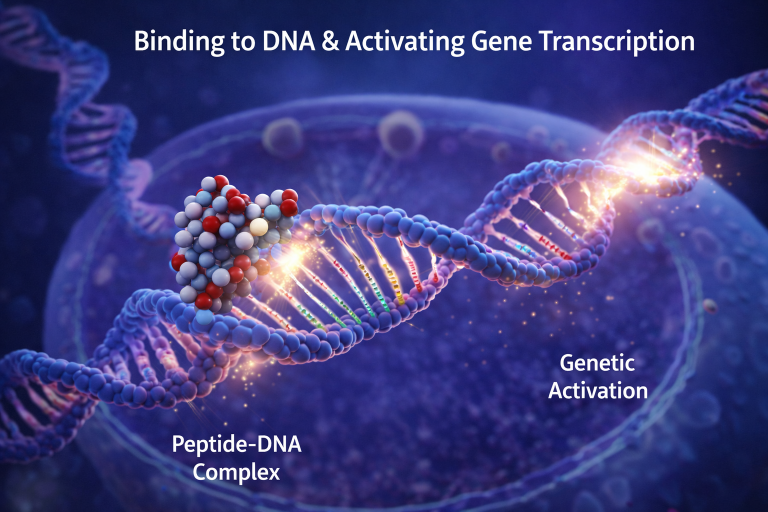
They Bind Directly to DNA and Activate Gene Transcription
The peptides penetrate the cell nucleus and bind to specific regions of DNA.
What that means practically:
- They help “switch on” certain genes.
- This leads to the production of messenger RNA (mRNA).
- mRNA then instructs the cell to build specific proteins.
- 👉 So they don’t just float around — they interact directly with genetic material to influence what proteins the cell makes.
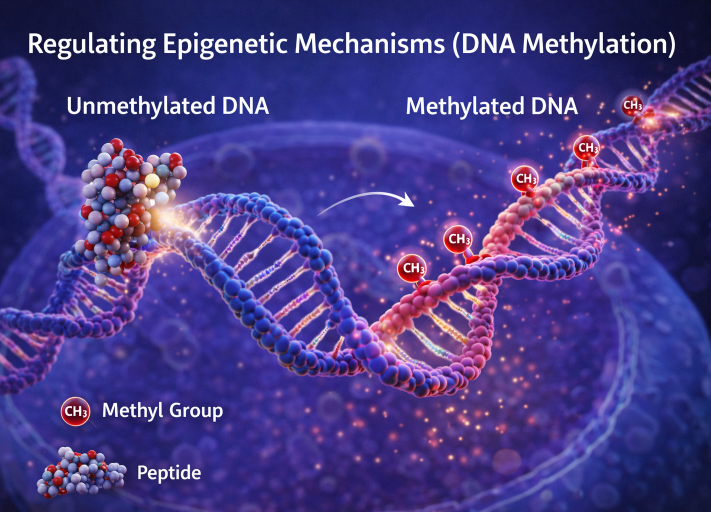
They Regulate Epigenetic Mechanisms (DNA Methylation)
They regulate epigenetic mechanisms of DNA methylation.
In simple terms:
- They influence how genes are expressed without changing the DNA code.
- They help adjust whether certain genes are more active or less active.
- This can restore more “youthful” or normal cellular function patterns.
- 👉 They don’t change your DNA — they influence how your DNA behaves.
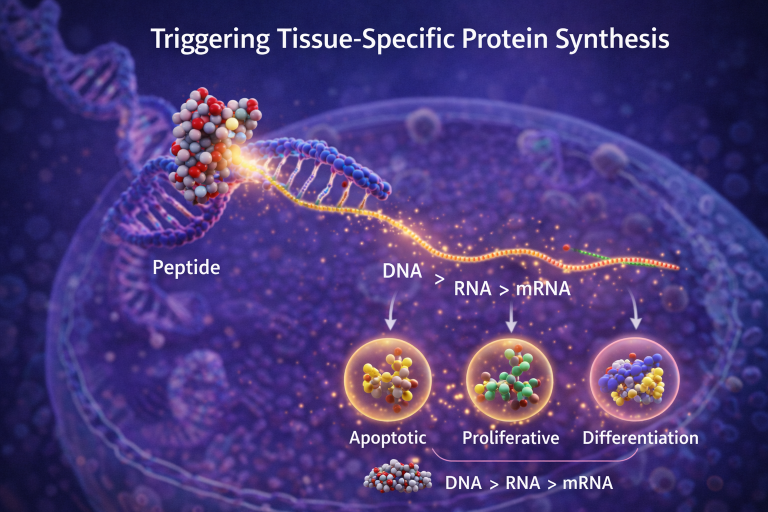
They Trigger Tissue-Specific Protein Synthesis
They have a 3-signal development cycle:
- Gene activation
- Modification of transcription
- Synthesis of tissue-specific proteins
This results in production of proteins related to:
- Proliferation (cell growth)
- Differentiation (specialisation)
- Apoptosis regulation (controlled cell turnover)
- 👉 That means the peptide ultimately leads to production of proteins specific to the target organ (adrenal, prostate, brain, etc.).